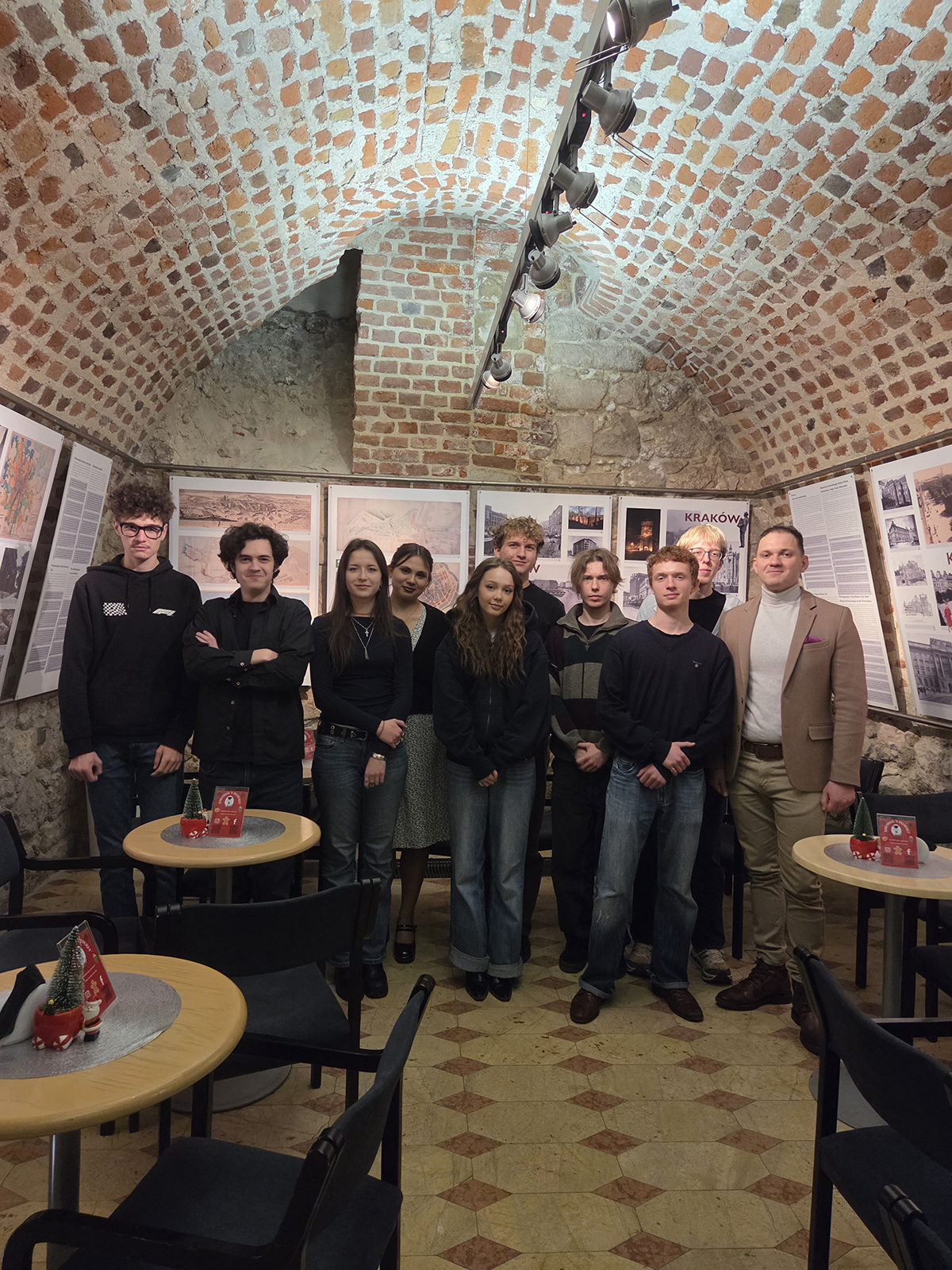
As part of the course “The Historian’s Workshop” taught by Dr Kamil Ruszała at the Institute of History of the Jagiellonian University, students took part in special workshops organized in connection with the exhibition. These sessions were designed to combine academic historical training with practical skills in communicating history to wider audiences. During the workshops, students explored key aspects of the urban history of Central European cities presented in the exhibition. Particular attention was given to the catastrophic flood in Szeged in 1879 and its long-term impact on the city’s spatial layout and modern reconstruction; the urban form and historical development of Košice; and the role of early modern and modern fortifications in shaping the urban landscape of Brno. Through these case studies, students examined how crises, military infrastructure, and modernization processes influenced the transformation of urban space. As a final assignment, students prepared short popularizing statements aimed at presenting both the historical themes and the exhibition itself in an accessible and engaging way for a non-academic audience. This task encouraged them to translate scholarly knowledge into clear, compelling narratives suitable for museum visitors and the general public. The workshops formed part of a broader set of public history lessons, in which students practiced how to work with historical content beyond the university classroom. By engaging directly with the exhibition and its themes, they gained hands-on experience in public-oriented historical interpretation, learning how historians can actively participate in shaping public understanding of the past.